

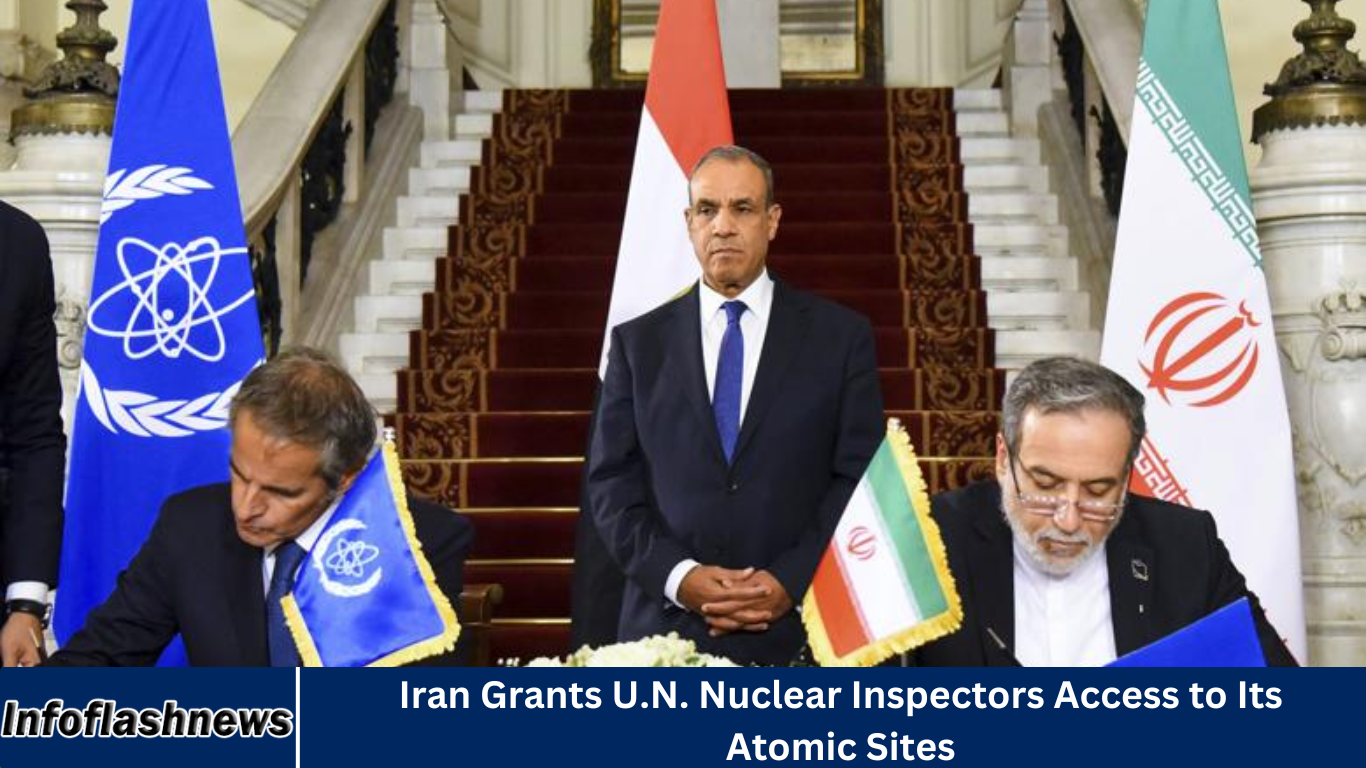
In a significant development for international diplomacy and nuclear non-proliferation, Iran has granted access to its atomic sites to inspectors from the United Nations’ International Atomic Energy Agency (IAEA). This decision marks a critical step in addressing longstanding concerns about the transparency of Iran’s nuclear program and its potential military dimensions.
The agreement is seen as a potential turning point in the relationship between Iran and the international community, particularly amid ongoing tensions surrounding the Joint Comprehensive Plan of Action (JCPOA), commonly known as the Iran nuclear deal.
This article explores the background, significance, implications, and future outlook of Iran’s decision to allow U.N. inspectors access to its nuclear facilities.
Background: Iran’s Nuclear Program and International Concerns
Historical Overview
Iran’s nuclear ambitions date back to the 1950s under the U.S.-backed “Atoms for Peace” program. However, following the 1979 Islamic Revolution, the direction and transparency of Iran’s nuclear development came under increased scrutiny.
By the early 2000s, suspicions grew that Iran was pursuing nuclear weapons capabilities under the guise of a civilian energy program. This led to international sanctions, negotiations, and eventually, the 2015 JCPOA agreement between Iran and six world powers (the U.S., U.K., France, Germany, Russia, and China).
The Collapse of the JCPOA
In 2018, the United States, under President Donald Trump, unilaterally withdrew from the JCPOA, reinstating harsh sanctions on Iran. In response, Iran gradually began to breach the agreement’s limits on uranium enrichment and stockpile levels, fueling concerns about its nuclear intentions.
Amid stalled negotiations to revive the JCPOA, Iran’s cooperation with the IAEA deteriorated. Inspectors were denied access to certain facilities, raising alarms within the international community about the lack of transparency.
Iran’s Latest Move: Granting Access to U.N. Inspectors
The Announcement
In a joint statement released in Vienna, the IAEA and Iran confirmed that Tehran has agreed to allow international nuclear inspectors access to several previously restricted nuclear sites. This access includes surveillance equipment, environmental sampling, and on-site visits at key locations believed to be central to Iran’s enrichment activities.
According to IAEA Director General Rafael Grossi, this cooperation is “a step in the right direction” toward restoring mutual trust and verifying Iran’s nuclear commitments under international agreements.
What Sites Are Involved?
While the full list of sites has not been disclosed for security reasons, the following locations are reported to be under inspection:
- Natanz: Iran’s primary uranium enrichment facility
- Fordow: An underground enrichment site previously used for high-level enrichment
- Arak: A heavy-water reactor suspected of having plutonium production capabilities
- Esfahan: A site related to uranium conversion processes
These sites have been of particular interest to the IAEA due to their advanced centrifuge installations and stockpile activities.
Why This Matters: Global and Regional Implications
Boost for Nuclear Non-Proliferation
Allowing U.N. inspectors back into sensitive nuclear facilities strengthens the global nuclear non-proliferation regime, which is primarily enforced through the IAEA. Verification and transparency are key pillars of this framework, and Iran’s cooperation is a necessary component for its success.
Impact on Iran’s Diplomatic Standing
Iran’s move is widely seen as an attempt to rebuild trust with the international community. In particular, it could:
- Reopen stalled JCPOA negotiations
- Improve diplomatic ties with European powers
- Ease economic sanctions in the long term
Tehran may be signaling its willingness to re-enter the global economy, especially as it faces internal economic pressures, inflation, and civil unrest.
Effect on U.S.–Iran Relations
While the Biden administration has expressed interest in returning to the nuclear deal, Iran’s full compliance and verifiability of its nuclear activities remain prerequisites. Granting access to U.N. inspectors could serve as a confidence-building measure and lay the groundwork for renewed dialogue between Washington and Tehran.
The Role of the IAEA in Nuclear Inspections
What the IAEA Does
The International Atomic Energy Agency is responsible for monitoring nuclear programs worldwide to ensure they are used exclusively for peaceful purposes. Its inspectors conduct:
- On-site inspections
- Environmental sampling
- Satellite monitoring
- Surveillance camera reviews
Challenges Faced
IAEA inspections in Iran have historically been challenging due to:
- Restricted access
- Limited transparency
- Disputes over the interpretation of agreements
- Political interference
This new agreement could reduce some of these barriers and allow for more comprehensive inspections, potentially paving the way for better compliance and reporting.
International Reactions
United States
The U.S. State Department welcomed the decision cautiously, stating, “Iran’s move to allow IAEA access is a constructive step, but more actions are needed to ensure full compliance with international nuclear agreements.”
European Union
The EU, a key player in the JCPOA, applauded Iran’s cooperation. Josep Borrell, the EU’s foreign policy chief, remarked that the development “opens the door for renewed engagement and diplomatic progress.”
Israel
In contrast, Israel remains highly skeptical. Prime Minister Benjamin Netanyahu emphasized that Iran must not be allowed to develop nuclear weapons under any circumstances and criticized the move as a potential ploy to reduce international pressure.
China and Russia
Both countries, which have maintained diplomatic and economic ties with Iran despite Western sanctions, welcomed the IAEA agreement as a step toward regional stability and nuclear disarmament.
Domestic Reaction in Iran
Political Spectrum
Inside Iran, the reaction has been mixed:
- Moderates and reformists view the decision as a path toward economic relief and global reintegration.
- Hardliners, however, criticize it as a concession to the West, potentially weakening Iran’s sovereignty and bargaining power.
Public Opinion
Amid economic turmoil, many Iranian citizens support greater engagement with the West if it leads to the easing of sanctions and improvement in living conditions.
The Road Ahead: What Comes Next?
JCPOA Revival?
Iran’s cooperation with the IAEA could reignite efforts to revive the nuclear deal, particularly if the United States and European allies perceive Iran’s actions as sincere and verifiable.
However, major obstacles remain, including:
- Disagreements over which sanctions should be lifted
- Political opposition in both Washington and Tehran
- Iran’s advancing nuclear capabilities that now exceed JCPOA limits
Long-Term Monitoring
The key to long-term success lies in sustained monitoring and compliance. The IAEA will likely demand:
- Continued access to declared and undeclared sites
- Unrestricted data from surveillance equipment
- Prompt clarification of any discrepancies in reported nuclear material
Regional Security Considerations
Iran’s decision may also influence regional powers, including Saudi Arabia and Turkey, which have expressed interest in pursuing nuclear technologies. Ensuring that Iran’s program remains peaceful will be essential for regional stability.
Frequently Asked Question
Why did Iran allow U.N. nuclear inspectors access to its atomic sites?
Iran allowed the International Atomic Energy Agency (IAEA) access to its nuclear facilities to improve transparency, ease international tensions, and potentially revive diplomatic talks—especially regarding the stalled 2015 nuclear deal (JCPOA). The move is seen as an effort to reduce sanctions and rebuild trust with global powers.
Which nuclear sites in Iran are being inspected by the IAEA?
While exact details remain confidential, key sites under inspection reportedly include:
- Natanz – Iran’s main uranium enrichment facility
- Fordow – An underground site with advanced centrifuges
- Arak – A heavy-water reactor facility
- Esfahan – A uranium conversion center
These sites are critical to understanding the scope and purpose of Iran’s nuclear activities.
What is the role of the IAEA in Iran’s nuclear inspections?
The International Atomic Energy Agency (IAEA) monitors Iran’s nuclear program to ensure it remains peaceful. Its inspectors verify compliance through on-site visits, environmental sampling, and reviewing surveillance data. The agency helps prevent the spread of nuclear weapons under the global non-proliferation framework.
Does this move mean Iran is complying with the nuclear deal (JCPOA)?
Not entirely. While granting access is a positive step, Iran is still enriching uranium beyond the JCPOA’s limits. The IAEA access allows verification, but full compliance would require Iran to roll back its nuclear advancements and return to all agreed limits under the original deal.
How has the international community reacted to Iran’s decision?
U.S. and EU: Welcomed the move cautiously, urging further cooperation.
- Israel: Remains skeptical and warns of potential deception.
- China and Russia: Support Iran’s decision and call for renewed diplomacy.
- The decision has reignited hope for constructive dialogue but has not resolved deeper geopolitical concerns.
Could this lead to the revival of the 2015 Iran nuclear deal?
Possibly. Granting access to U.N. inspectors is a trust-building measure that could lay the groundwork for renewed negotiations. However, revival depends on mutual agreement on sanctions relief, enrichment limits, and verification mechanisms.
What are the risks if inspections are limited or stopped again?
Limited access undermines the IAEA’s ability to verify peaceful intent. This raises the risk of:
- Regional instability, especially with rival nations like Israel and Saudi Arabia
- Nuclear proliferation, if Iran’s intentions remain unclear
- Further sanctions or military tensions, particularly from the West
- Continued transparency is essential to maintaining global nuclear security.
Conclusion
Iran’s decision to grant U.N. nuclear inspectors access to its atomic sites marks a pivotal moment in the ongoing saga of its nuclear program. It sends a signal—whether strategic or genuine—that Iran is ready to engage with the international community and potentially re-enter the global diplomatic fold. While it remains to be seen whether this move leads to lasting change or merely temporary relief from diplomatic pressure, it undeniably provides a renewed opportunity for dialogue, trust-building, and conflict resolution. As the IAEA begins its inspections, the world will be watching closely—not just to verify nuclear compliance, but to gauge whether Iran is truly committed to a peaceful path forward.