

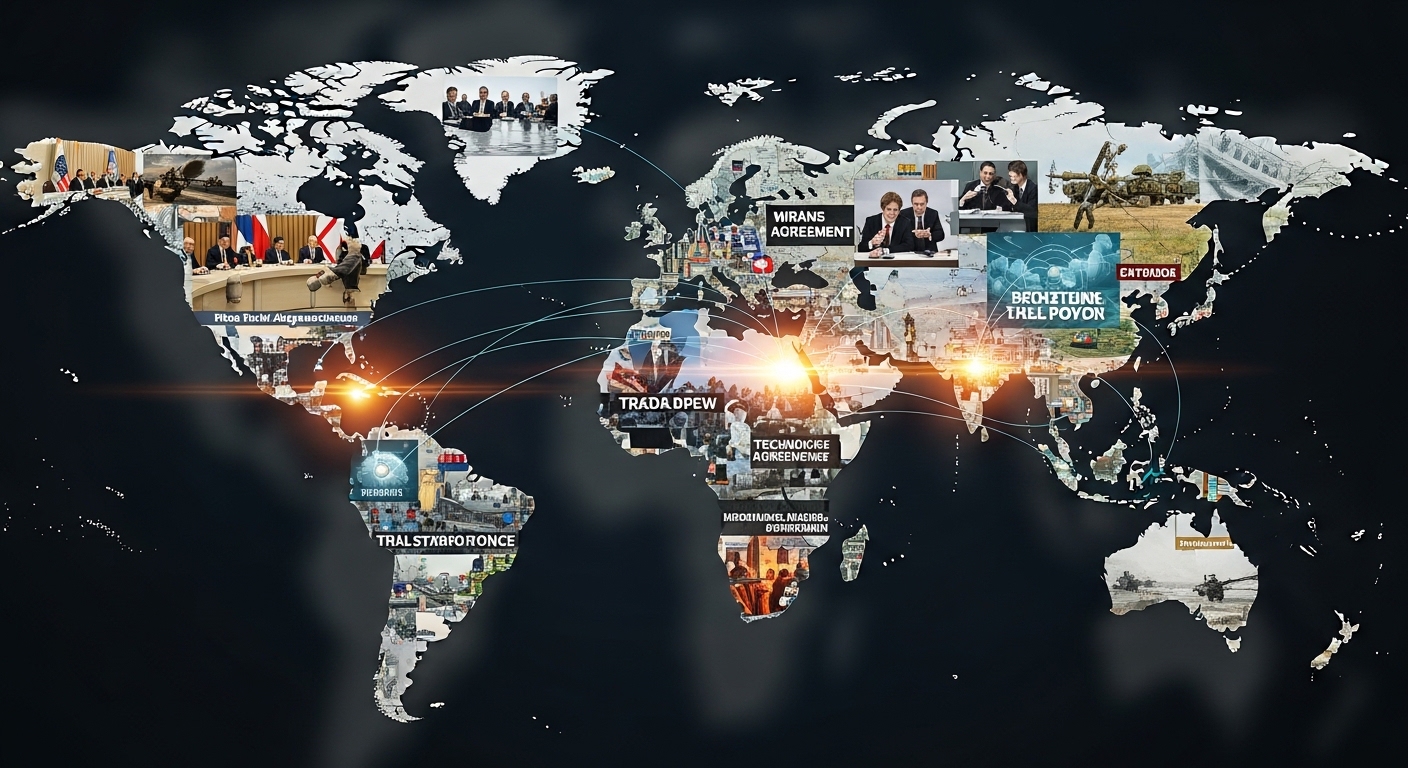
Global political power is shifting rapidly due to wars, economic competition, alliance changes, and rising influence from emerging nations. These events are not just headlines—they are actively reshaping how countries interact, trade, and maintain security. The modern world is moving toward a more complex and multipolar balance of power.
US–China Strategic Competition
Trade and Technology Rivalry
The ongoing rivalry between the United States and China remains the most influential factor in global politics. Competition over technology, semiconductor supply chains, and artificial intelligence leadership is reshaping global trade policies and alliances.
Military Presence in Asia-Pacific
Both nations are increasing their military presence in the Asia-Pacific region. This has led to rising tensions around maritime boundaries and strategic waterways, affecting global security stability.
Economic Decoupling Efforts
Partial economic separation between the two economies is taking place as both countries try to reduce dependency on each other in critical industries like tech and energy.
Diplomatic Engagement Attempts
Despite tensions, diplomatic meetings continue to manage conflicts and prevent escalation, especially regarding trade and global security concerns.
Global Influence Competition
Both countries are competing for influence in developing regions through investments, infrastructure projects, and strategic partnerships.
Middle East and Conflict Dynamics
Regional Military Conflicts
Ongoing conflicts in the Middle East continue to impact global energy markets, refugee flows, and international diplomacy, making the region a central geopolitical hotspot.
Energy Security Politics
Oil and gas supply chains are heavily influenced by political decisions in this region, affecting global prices and economic stability worldwide.
Diplomatic Peace Negotiations
International powers are actively engaged in negotiations to reduce tensions and stabilize conflict zones across the region.
Strategic Military Alliances
Countries are forming new alliances and strengthening defense partnerships to secure regional interests and stability.
Humanitarian Crisis Response
Global organizations are working to manage displacement and humanitarian challenges caused by ongoing conflicts.
European Political Realignment
EU Defense Cooperation Growth
European nations are increasing cooperation on defense and security policies in response to global instability and rising external threats.
Political Fragmentation Trends
Several European countries are experiencing internal political divisions, leading to shifting government coalitions and unstable leadership.
Economic Policy Disagreements
Debates over inflation control, taxation, and spending policies are shaping elections and government strategies across Europe.
Immigration Policy Shifts
Immigration remains a major political issue influencing voter behavior and policy reforms across the region.
Energy Independence Efforts
Europe is working to reduce dependency on external energy sources by investing in renewable energy and alternative suppliers.
Russia and Global Security Influence
Military Strategy Adjustments
Russia’s military and strategic decisions continue to influence NATO policies and global defense planning.
Sanctions and Economic Pressure
Western sanctions are reshaping Russia’s economy and forcing shifts in global trade patterns.
Energy Export Politics
Russia remains a key player in global energy supply, influencing pricing and geopolitical negotiations.
Regional Alliances Expansion
Russia is strengthening ties with select countries to counterbalance Western influence.
Cybersecurity and Hybrid Warfare
Cyber operations and information warfare are increasingly part of modern geopolitical strategies.
Rise of Emerging Global Powers
India’s Expanding Influence
India is growing as a major global power through technology growth, diplomacy, and economic expansion.
Brazil and Latin America Shift
Latin American nations are gaining stronger voices in global forums and economic alliances.
Africa’s Strategic Importance
African countries are becoming more important due to natural resources and growing populations.
New Trade Alliances
Emerging economies are forming new trade agreements to reduce dependency on traditional Western systems.
Digital Economy Growth
Developing nations are rapidly adopting digital systems, increasing their global competitiveness.
Global Institutions and Power Shifts
United Nations Reform Debate
There is increasing discussion about reforming global institutions to better reflect modern power distribution.
WTO and Trade Rule Changes
Global trade organizations are adapting rules to address new economic realities and digital commerce.
Climate Policy Negotiations
Climate agreements are influencing international relations and creating both cooperation and conflict among nations.
Financial System Adjustments
Global financial institutions are evolving to address inflation, debt, and currency stability challenges.
Human Rights and Global Diplomacy
Human rights issues continue to influence diplomatic relationships and international decision-making.
Cyber and Information Warfare
Digital Propaganda Campaigns
Countries are increasingly using digital platforms to influence public opinion and political narratives.
Cybersecurity Threat Escalation
Cyberattacks on infrastructure and government systems are becoming more frequent and sophisticated.
Election Interference Concerns
Digital misinformation is now a major concern during elections worldwide.
AI-Driven Information Control
Artificial intelligence is being used to detect and also spread information, creating both risks and protections.
Global Cyber Defense Alliances
Nations are forming alliances to strengthen cybersecurity cooperation and defense systems.
FAQs
What is changing global power balance today?
US–China rivalry, regional conflicts, and emerging economies are reshaping global power.
Why is US–China competition important?
Because it affects global trade, technology, and military stability.
Are new countries becoming global powers?
Yes, countries like India and Brazil are increasing global influence.
How do conflicts affect global power?
They shift alliances, energy control, and economic influence.
What is multipolar world order?
A system where multiple countries share global power instead of one dominant superpower.
Conclusion
Top political events today are reshaping the global power balance through competition between major nations, rising influence of emerging economies, and ongoing regional conflicts. As alliances shift and new powers emerge, the world is moving toward a more complex multipolar structure. These changes are redefining diplomacy, security, and global cooperation in the modern era.