

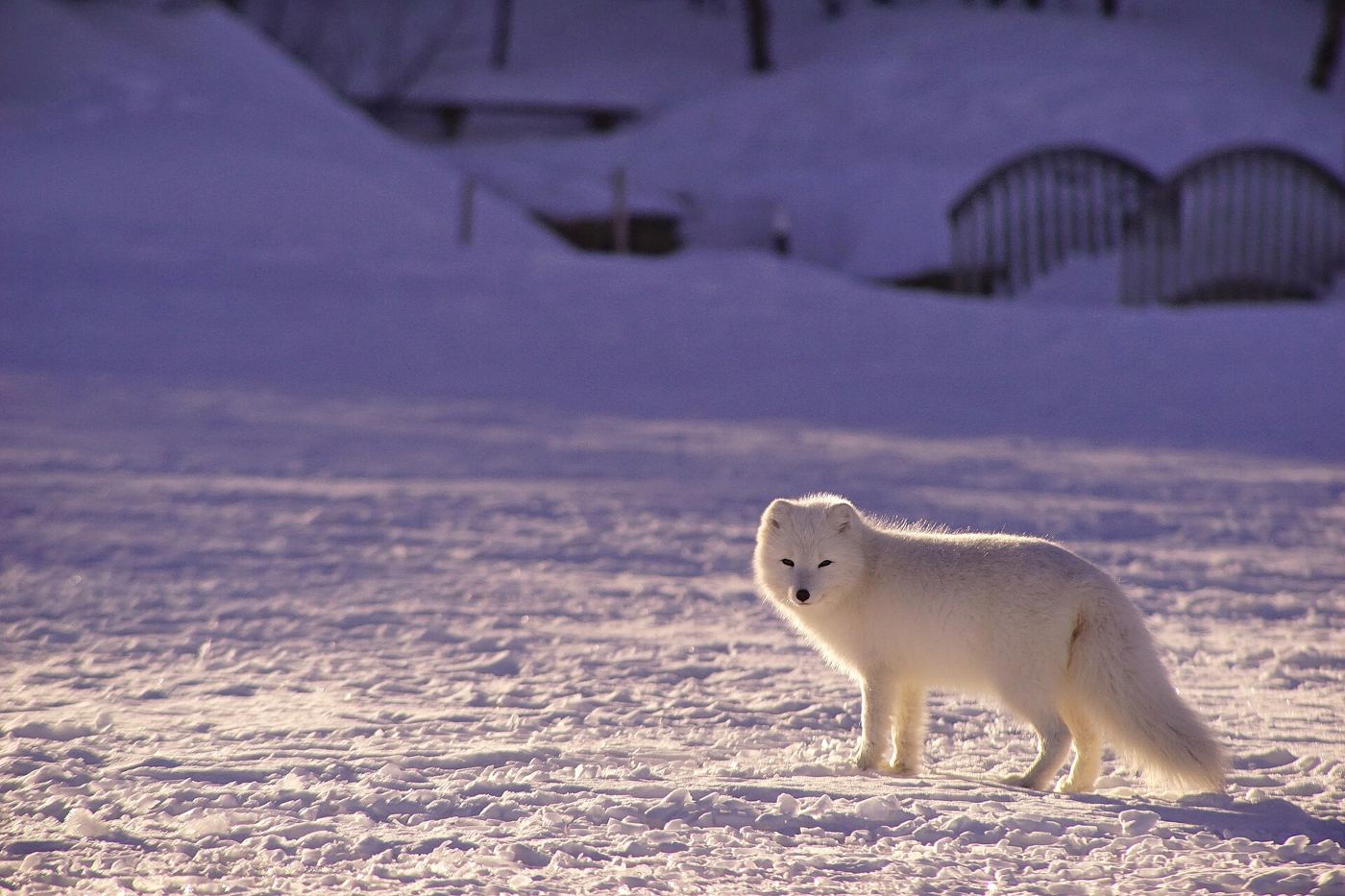
In the far north, where winter buries the land under snow and summer turns it green and brown, the Arctic fox changes its coat to match. In winter the fox is pure white, invisible against the snow as it hunts lemmings beneath the drifts, listening for the faint rustle of a rodent moving under the snow. When spring arrives, the white coat sheds and a darker brown or grey coat grows in, blending with the rocks, moss and bare earth of the summer tundra. The change is driven by the length of the day, with hormones responding to the shifting light as the seasons turn. A white fox in summer would stand out to predators and prey alike, while a dark fox in winter would be spotted against the snow, so the timing of the change matters for survival. Some foxes carry a blue-grey morph that stays dark all year, a variant that is more common on the rocky coasts of Iceland and Greenland.
What the Evidence Shows
The foxes are more than masters of camouflage. They are among the toughest travellers in the Arctic, with thick fur on their paws that works like snowshoes and a body that can survive temperatures below minus fifty degrees. A fox can walk hundreds of kilometres across the sea ice in search of food, following polar bears to scavenge the remains of their seal hunts, and some have been tracked crossing from one island to another over the frozen sea. In summer they cache food, burying eggs and lemmings in the ground to eat during the lean winter months. Climate change is now pressing on them, since warmer winters bring less snow and more rain, and the red fox is moving north into their territory, competing for the same dens and prey. Researchers are watching the boundary between the two species, since it marks how quickly the warming Arctic is changing. Reporting and analysis from sources such as Nature track the same developments, and specialists following the Arctic foxes changing colour with the seasons say the direction is now consistent across independent lines of evidence.
The Wider Context
The wider context is a research landscape in which replication and open data now decide reputations. Findings connected to the Arctic foxes changing colour with the seasons are being checked by independent groups with shared datasets, and the teams involved publish their methods in full so rivals can test every step. That discipline is slower than a headline cycle, but it is why results in this area increasingly survive first contact with scrutiny.
What Happens Next
What happens next in the story of the Arctic foxes changing colour with the seasons will be decided by follow-up work already under way: larger samples, longer observation and instruments that have not yet come online. The researchers involved are unusually united on one point, that the current results justify the next investment of time and money. Readers will not have to wait long for the first tests of that claim. You can follow related developments in our coverage of science.
None of this will be settled by a single announcement, study or product launch. The pattern to watch is accumulation: independent confirmations, honest reporting of failures and steady improvement in the underlying numbers. Readers who follow those signals, rather than the loudest claim of the week, will understand this subject better than most of the commentary surrounding it suggests is possible.
