

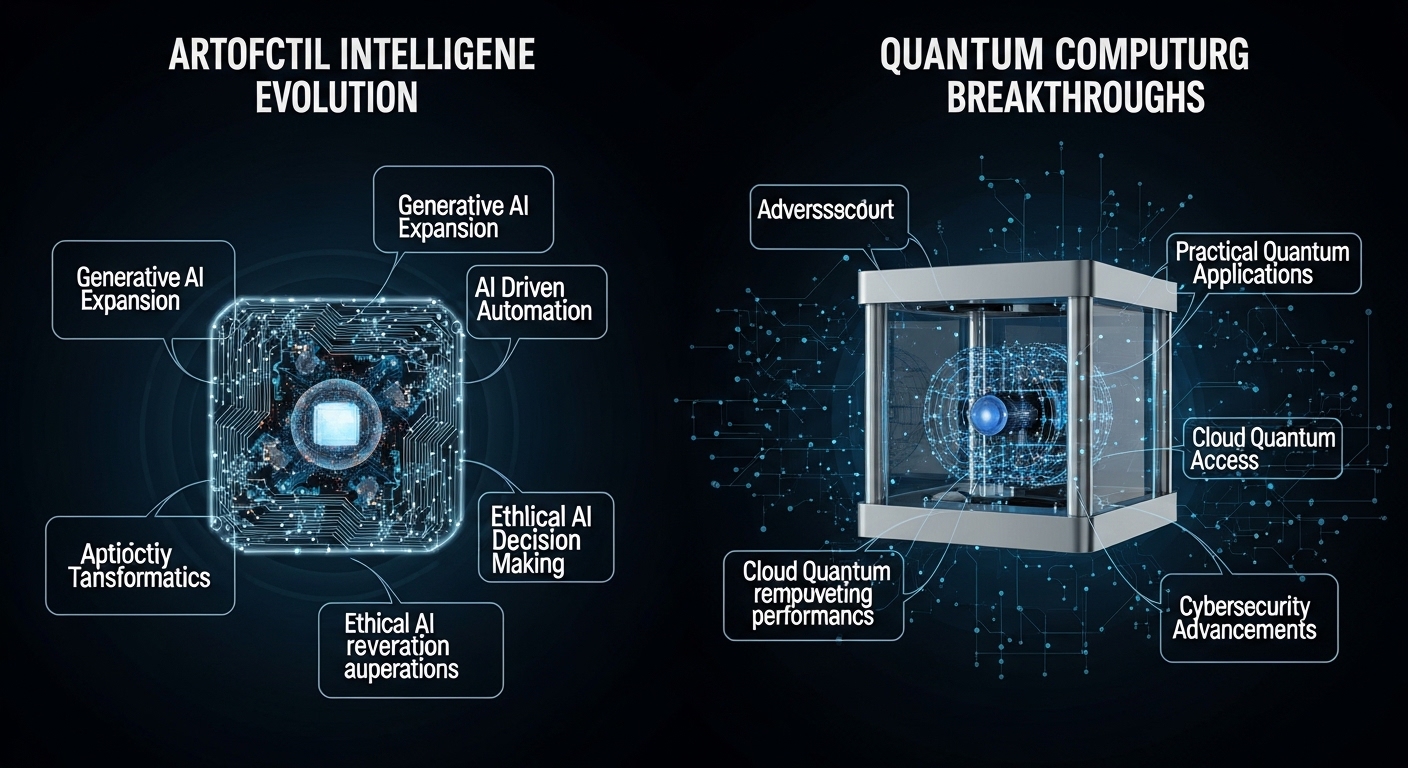
Technology is evolving faster than ever, and the latest trends are reshaping how people live, work, and interact with digital systems. From artificial intelligence breakthroughs to quantum computing progress, today’s innovation landscape is focused on speed, automation, intelligence, and connectivity. These trends are not just futuristic ideas anymore—they are actively transforming industries and everyday life.
Artificial Intelligence Evolution
Agentic AI Systems
Agentic AI refers to intelligent systems that can independently plan, decide, and complete tasks with minimal human input. These systems are moving beyond simple chatbots into real digital assistants that manage workflows, automate businesses, and improve productivity across industries.
Generative AI Expansion
Generative AI is rapidly growing in content creation, coding, design, and media production. It helps businesses generate text, images, and software faster, reducing workload and increasing efficiency. This technology is becoming a core part of modern digital ecosystems.
AI Driven Automation
AI-powered automation is transforming industries by replacing repetitive tasks with intelligent systems. From customer service to manufacturing, automation improves speed, reduces errors, and increases productivity in global businesses.
AI in Decision Making
Businesses now rely on AI systems to analyze data and support decision-making processes. This improves accuracy in forecasting, risk management, and customer behavior analysis, making operations more efficient and data-driven.
Ethical AI Development
As AI grows, ethical concerns like bias, privacy, and transparency are becoming critical. Companies are focusing on responsible AI development to ensure fairness, safety, and trust in digital systems.
Quantum Computing Breakthroughs
Practical Quantum Applications
Quantum computing is moving from theory to real-world use in areas like cryptography, drug discovery, and material science. These systems can solve complex problems far faster than traditional computers.
Quantum AI Integration
The combination of quantum computing and AI is creating powerful hybrid systems. This integration improves optimization, machine learning performance, and complex data processing capabilities.
Cloud Quantum Access
Quantum computing is becoming more accessible through cloud platforms, allowing businesses and researchers to experiment without owning physical quantum machines.
Cybersecurity Advancements
Quantum technology is also reshaping cybersecurity by introducing both new threats and stronger encryption methods, making data protection more advanced and complex.
Industry Transformation Impact
Industries like healthcare, finance, and logistics are expected to benefit significantly from quantum computing innovations, improving speed and accuracy in critical operations.
Internet of Things and Smart Connectivity
Edge AI Computing
Edge AI processes data closer to devices instead of relying on central servers. This improves speed, reduces latency, and supports real-time decision making in smart systems.
Smart Device Expansion
Smart devices like wearables, home assistants, and connected appliances are becoming more intelligent and integrated into daily life, improving convenience and automation.
Industrial IoT Growth
Factories and industries are adopting IoT systems to monitor machines, improve efficiency, and reduce downtime through predictive maintenance.
Smart Cities Development
Smart cities use IoT technology to manage traffic, energy, and public services more efficiently, creating better urban living environments.
Real Time Data Processing
IoT systems generate massive data streams that are processed instantly to improve decision making and system responsiveness.
Robotics and Automation Trends
Humanoid Robotics Growth
Humanoid robots are becoming more advanced and are being tested in manufacturing, healthcare, and customer service roles.
Autonomous Machines
Self-operating machines are being used in logistics, agriculture, and industrial operations to improve efficiency and reduce human workload.
Collaborative Robots
Cobots work alongside humans in factories, improving productivity while maintaining safety and precision in tasks.
AI Powered Robotics
Robots powered by AI can learn, adapt, and improve performance over time, making them more flexible and useful across industries.
Service Industry Automation
Robotics is also entering service sectors like hospitality and retail, improving speed and customer experience.
Cybersecurity and Digital Safety
AI Driven Cyber Defense
AI systems are being used to detect and prevent cyber threats in real time, improving security across digital platforms.
Zero Trust Security Models
Zero trust frameworks ensure that no user or system is automatically trusted, strengthening digital protection against attacks.
Data Privacy Protection
Companies are focusing more on protecting user data through encryption and stricter privacy regulations.
Cyber Threat Evolution
Cyber threats are becoming more advanced, requiring continuous improvement in security systems and monitoring tools.
Secure Cloud Systems
Cloud platforms are implementing stronger security layers to protect stored data and digital operations.
Immersive and Extended Reality
Virtual Reality Growth
Virtual reality is being used in gaming, education, and training to create immersive digital experiences.
Augmented Reality Applications
AR enhances real-world environments with digital information, improving navigation, shopping, and learning experiences.
Mixed Reality Systems
Mixed reality combines physical and digital environments for advanced simulations and interactive applications.
Metaverse Development
The metaverse is expanding as a virtual shared space for social interaction, business, and entertainment.
Immersive Learning Tools
Educational systems are adopting immersive technologies to improve engagement and understanding in learning environments.
Sustainable and Green Technology
Energy Efficient Computing
Technology companies are focusing on reducing energy consumption in data centers and devices to support sustainability.
Green Data Centers
New data centers are being designed to minimize carbon emissions and use renewable energy sources.
Sustainable Manufacturing Tech
Manufacturing industries are adopting eco-friendly technologies to reduce waste and environmental impact.
Clean Energy Integration
Technology is supporting the transition to renewable energy sources like solar and wind power.
Eco Friendly Innovation
Innovation is increasingly focused on balancing technological growth with environmental responsibility.
FAQs
What is the biggest technology trend today?
Artificial intelligence and automation are the most dominant trends shaping modern technology.
How does quantum computing change the future?
It solves complex problems faster than traditional computers and impacts science, finance, and security.
Why is AI important in modern technology?
AI improves automation, decision-making, and efficiency across industries.
What is edge computing?
It processes data closer to devices for faster and real-time responses.
Are smart devices part of IoT?
Yes, smart devices are a key part of the Internet of Things ecosystem.
Conclusion
The latest technology trends are driving a powerful transformation in how the world operates. Artificial intelligence, quantum computing, IoT, robotics, and cybersecurity innovations are shaping a smarter and more connected future. These advancements are improving efficiency, security, and convenience across industries. As technology continues to evolve, it will redefine innovation, productivity, and global digital experiences in the years ahead.