

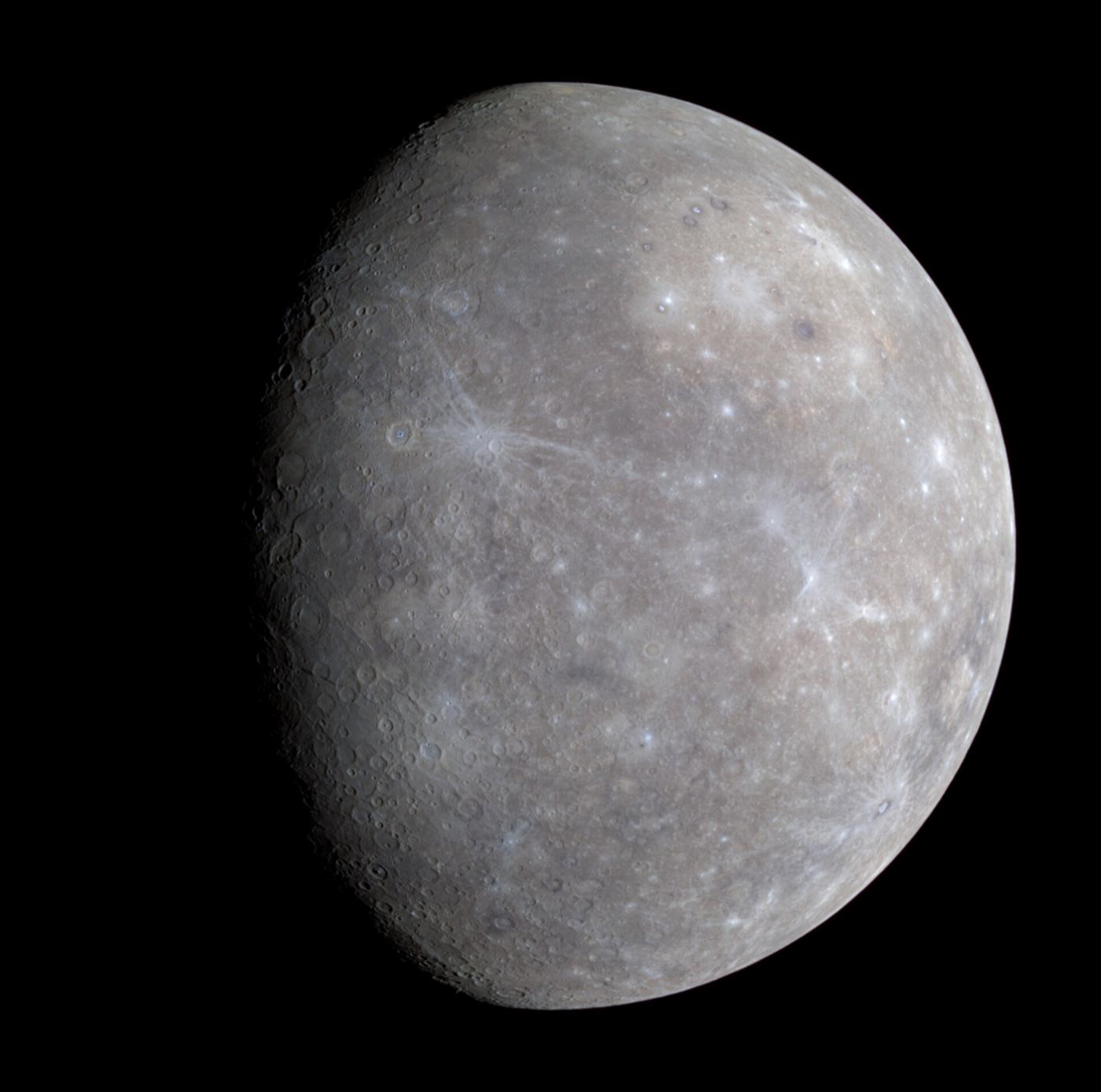
Europe’s BepiColombo spacecraft entered orbit around Mercury on 21 November 2026 after an eight-year journey, but a software glitch cut its braking burn short and left it in a wider orbit than planned. The joint ESA and JAXA mission fired four axial thrusters at 18:24 UTC, about 635 kilometres above Mercury’s surface, for a burn meant to last 37 minutes. When contact returned through ESA’s New Norcia antenna, the spacecraft was in safe mode and the burn had delivered only about 77 percent of the planned velocity change. ESA confirmed on 23 November that BepiColombo was safe and in a stable orbit, the first spacecraft ever to enter orbit around another planet using weak stability capture.
What the Evidence Shows
The shortened burn left BepiColombo circling Mercury once every 75 hours instead of the intended 58 hours, but ESA says the remaining manoeuvres have already been adapted to the new trajectory with no extra burns needed. The spacecraft launched in October 2018 and reached Mercury after nine gravity-assist flybys, one at Earth, two at Venus and six at Mercury. Its two science orbiters, ESA’s Mercury Planetary Orbiter and JAXA’s Mio, are due to separate on 9 December, with science operations starting in April 2027. The mission will study Mercury’s magnetic field, surface and interior until 2029, giving scientists their first close look at the Sun’s innermost planet since NASA’s MESSENGER ended its mission in 2015. Reporting and analysis from sources such as Nature track the same developments, and specialists following the BepiColombo Mercury orbit insertion say the direction is now consistent across independent lines of evidence.
The Wider Context
The wider context is a research landscape in which replication and open data now decide reputations. Findings connected to the BepiColombo Mercury orbit insertion are being checked by independent groups with shared datasets, and the teams involved publish their methods in full so rivals can test every step. That discipline is slower than a headline cycle, but it is why results in this area increasingly survive first contact with scrutiny.
What Happens Next
What happens next in the story of the BepiColombo Mercury orbit insertion will be decided by follow-up work already under way: larger samples, longer observation and instruments that have not yet come online. The researchers involved are unusually united on one point, that the current results justify the next investment of time and money. Readers will not have to wait long for the first tests of that claim. You can follow related developments in our coverage of science.
None of this will be settled by a single announcement, study or product launch. The pattern to watch is accumulation: independent confirmations, honest reporting of failures and steady improvement in the underlying numbers. Readers who follow those signals, rather than the loudest claim of the week, will understand this subject better than most of the commentary surrounding it suggests is possible.
